

 Travel Diary
BEST PLACES TO VISIT IN DELHI
One City. A Thousand Stories. Discover Delhi Beyond the Ordinary.
Delhi is not a city you simply visit—it is a city you experience.
From grand Mughal monuments and colonial-era landmarks to peaceful gardens, colourful markets, spiritual spaces and memorials that honour India's history, every corner of Delhi tells a different story.
For first-time visitors, Delhi offers the perfect introduction to India's heritage and contemporary culture. You can walk through centuries-old architecture in the morning, explore local handicrafts and flavours in the afternoon, admire the grandeur of India's capital by evening, and end the day wandering through the lively lanes of Old Delhi.
Our Delhi sightseeing experience brings together the city's most iconic landmarks along with some of its fascinating cultural and spiritual corners.
1. Humayun’s Tomb & Sunder Nursery – Where Heritage Meets Nature
“A Mughal masterpiece surrounded by gardens, stories and serenity.”
Begin your Delhi exploration with the magnificent Humayun’s Tomb, one of the city's finest examples of Mughal architecture. Built in the 16th century, the monument is known for its graceful proportions, red sandstone and white marble detailing, symmetrical design and beautiful Charbagh-style gardens.
Its grand central dome and carefully planned pathways create an atmosphere that feels both majestic and peaceful.
The experience becomes even more special with a visit to Sunder Nursery, located next to Humayun’s Tomb. This beautifully restored heritage landscape combines gardens, historic monuments, water features, greenery and open spaces.
Together, Humayun’s Tomb and Sunder Nursery offer a wonderful combination of history, architecture, nature and tranquillity.
2. Qutub Minar – Standing Tall Through Centuries
“Look up—Delhi’s medieval history rises before you.”
The towering Qutub Minar is one of Delhi's most recognisable landmarks and an unforgettable introduction to the city's medieval past.
Rising dramatically above the surrounding archaeological complex, the monument showcases intricate carvings, inscriptions and architectural details reflecting the artistic traditions of its era.
But the Qutub complex is more than just the famous tower. Exploring its surrounding ruins, gateways, ancient structures and the celebrated Iron Pillar gives visitors a deeper understanding of the layers of history that developed around this remarkable site.
A visit here is not simply about seeing a monument—it is about stepping into a fascinating chapter of Delhi's past.
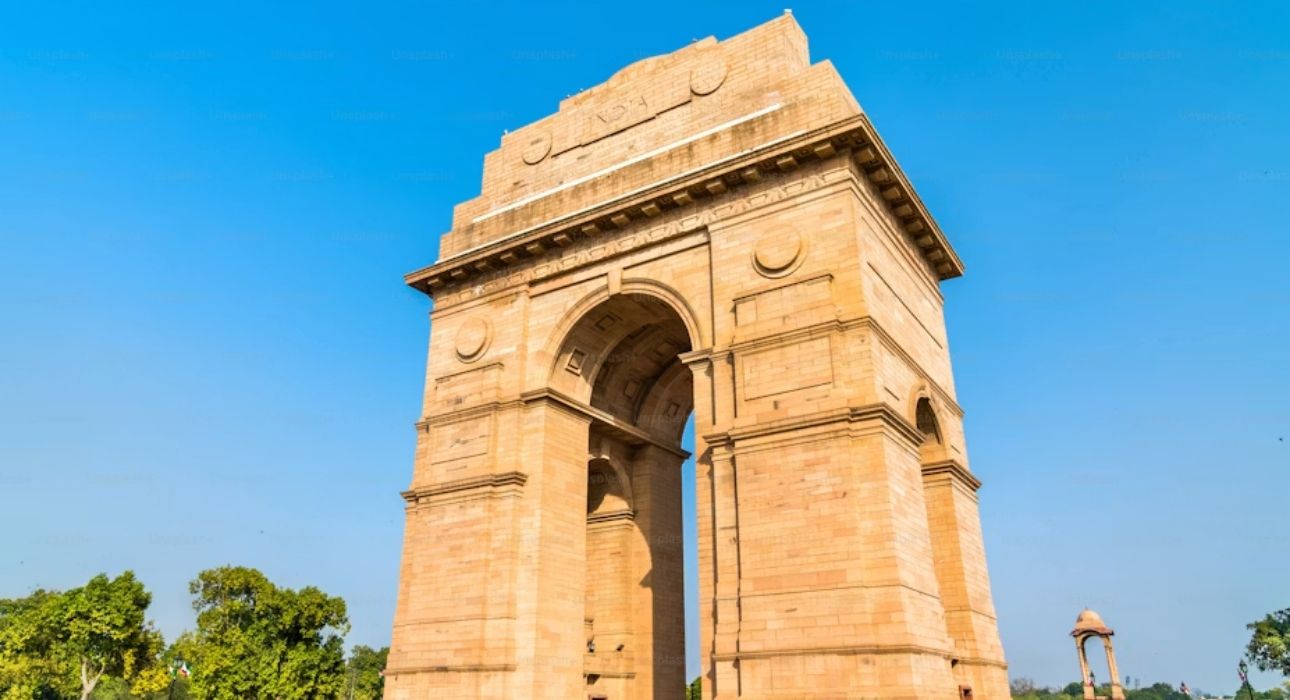
3. India Gate – A Landmark of National Pride
“Where history, remembrance and the spirit of New Delhi come together.”
Standing proudly at the heart of New Delhi, India Gate is one of the city's most recognisable landmarks. The imposing arch is a war memorial dedicated to Indian soldiers who lost their lives during the First World War and subsequent conflicts associated with the memorial.
The wide avenues and open green spaces surrounding India Gate give the area a distinct character. During the evening, the monument takes on a different atmosphere as it is illuminated and the surrounding area comes alive with visitors.
For travellers, India Gate is more than a photo stop—it is a place to pause, reflect and experience one of the defining symbols of India's capital.
4. Rashtrapati Bhavan – The Grand Seat of India’s Presidency
“Architectural grandeur at the heart of India’s capital.”
No Delhi experience feels complete without witnessing the grandeur of Rashtrapati Bhavan, one of the most remarkable buildings in New Delhi.
Its monumental architecture, imposing scale and carefully designed surroundings reflect the historic evolution of India's capital.
From its magnificent façade to the formal avenues surrounding it, the area offers a glimpse into the architectural grandeur of Lutyens' Delhi.
We have a separate detailed blog dedicated to Rashtrapati Bhavan, where you can explore its history, architecture and visitor experience in greater detail.
5. Lotus Temple – A Place to Pause, Reflect & Find Peace
“A lotus in marble, rising above the noise of the city.”
The Lotus Temple is one of Delhi's most distinctive modern landmarks. Designed in the shape of a blooming lotus, the structure creates a striking contrast with the busy urban surroundings of South Delhi.
The temple is associated with the Bahá'í Faith and welcomes people of all backgrounds. Inside, the atmosphere is intentionally quiet and contemplative, making the visit feel very different from a traditional sightseeing stop.
Whether you are interested in architecture, spirituality or simply looking for a peaceful moment during a busy Delhi tour, the Lotus Temple offers a memorable experience.
6. Dilli Haat – Discover India Through Crafts, Food & Culture
“One marketplace, many states, countless stories.”
If you want to experience India's colourful craft traditions in one place, Dilli Haat is a wonderful stop.
Designed as an open-air cultural marketplace, it brings together handicrafts, textiles, traditional products and artistic creations from different parts of the country.
The experience is not limited to shopping. Visitors can also discover regional cuisines and flavours, making Dilli Haat a place where India's diversity can be experienced through both craft and food.
It is particularly enjoyable for travellers looking to take home something meaningful rather than an ordinary souvenir.
7. Akshardham Temple – Grandeur, Devotion & Indian Heritage
“Where devotion is transformed into extraordinary architecture.”
Akshardham Temple is one of Delhi's most spectacular architectural and cultural attractions.
The vast complex showcases beautifully detailed craftsmanship, traditional Indian architectural elements and an atmosphere of devotion.
The intricate carvings and sculptural details reveal the extraordinary level of craftsmanship behind the complex. Beyond its visual grandeur, Akshardham presents visitors with an opportunity to appreciate aspects of Indian culture, spirituality and traditions.
It is a place where architecture becomes an experience—and where every detail invites a closer look.
8. Agrasen Ki Baoli – A Hidden Chapter of Delhi’s History
“Step down into one of Delhi’s most intriguing historic spaces.”
Tucked away amid the modern streets of central Delhi, Agrasen Ki Baoli feels like a hidden discovery.
This historic stepwell is built in a long, symmetrical form, with a series of steps leading down between impressive stone walls.
Its unusual architecture creates a dramatic contrast with the surrounding modern city. The quiet atmosphere and distinctive structure have also made it a favourite among photographers and travellers interested in lesser-known heritage sites.
Agrasen Ki Baoli proves that sometimes the most fascinating experiences in Delhi are found away from the city's grandest monuments.
9. Lodhi Garden – History in the Middle of Greenery
“Walk through history without leaving the calm of nature.”
Lodhi Garden offers a refreshing change of pace from Delhi's busy streets.
Spread across a beautiful green landscape, the garden contains historic tombs and architectural remains dating back to the Lodhi and Sayyid periods.
Walking through the gardens allows visitors to experience Delhi's history in a relaxed and open setting. The combination of old stone monuments, lawns, trees and peaceful pathways makes it one of the city's most pleasant heritage spaces.
It is ideal for travellers who want to combine history with a leisurely outdoor experience.
10. Raj Ghat – A Place of Reflection & Remembrance
“A quiet space where history speaks without words.”
Raj Ghat is the memorial dedicated to Mahatma Gandhi, one of India's most influential historical figures.
Located in a peaceful landscaped setting, the memorial is intentionally simple, creating an atmosphere of quiet reflection.
A visit here offers travellers an opportunity to understand an important part of India's modern history and Gandhi's enduring influence on the country's story.
It is a place to slow down, reflect and appreciate the people and ideas that shaped modern India.
11. Gandhi Smriti – Walk Through the Final Chapter of Gandhi’s Life
“Step closer to the life, ideals and legacy of Mahatma Gandhi.”
Gandhi Smriti offers a more personal perspective on Mahatma Gandhi's life and legacy.
The site preserves the memory of the final period of his life and allows visitors to connect with the historical events that took place here.
Unlike a grand monument, Gandhi Smriti provides a quieter and more intimate experience. The setting encourages visitors to reflect on Gandhi's philosophy, simplicity and contribution to India's freedom movement.
For those interested in India's modern history, this is a meaningful stop.
12. Gurudwara Bangla Sahib – Faith, Peace & Selfless Service
“Where faith meets compassion, and every visitor is welcomed.”
Gurudwara Bangla Sahib is one of Delhi's most revered Sikh landmarks and an important part of the city's spiritual and cultural landscape.
Located in the heart of New Delhi, the gurudwara is instantly recognisable by its striking white architecture, golden dome and peaceful Sarovar.
The site is associated with Guru Har Krishan Sahib, the eighth Sikh Guru, and holds deep spiritual significance. It is also known for its tradition of seva, or selfless service, reflecting values of equality, compassion and community.
Visitors can spend a quiet moment in the prayer hall, admire the beautiful architecture and experience the peaceful surroundings of the Sarovar.
The welcoming atmosphere makes the gurudwara a meaningful stop for travellers from all backgrounds.
A visit to Bangla Sahib offers more than sightseeing—it provides a glimpse into Delhi's living spirituality, culture and tradition of service.
“Come for the beauty. Stay for the peace. Leave inspired by the spirit of seva.”
13. Crafts Museum – Experience the Living Traditions of India
“India’s artistic heritage, brought to life through hands, traditions and imagination.”
The Crafts Museum is a wonderful place to discover India's enormous diversity of traditional art and craftsmanship.
Instead of presenting Indian culture only through historical objects, the museum helps visitors understand the skills, techniques and traditions behind India's handicrafts.
From textiles and folk traditions to sculptures and everyday objects, the collections showcase the creativity of artisans from different regions of the country.
It is an especially rewarding visit for travellers interested in Indian art, design, textiles and cultural traditions.
14. Chandni Chowk & Jama Masjid – Experience the Energy of Old Delhi
“Leave the quiet avenues behind and step into the beating heart of Old Delhi.”
A visit to Delhi is incomplete without experiencing Chandni Chowk, one of the city's most vibrant and historic neighbourhoods.
The narrow lanes, busy bazaars, traditional shops, street food and centuries-old atmosphere create an experience that feels completely different from modern New Delhi.
The excursion becomes even more memorable with Jama Masjid, one of India's most important historic mosques. Its imposing architecture and expansive courtyard reflect the grandeur of Mughal-era Delhi.
Together, Chandni Chowk and Jama Masjid offer an authentic glimpse into the city's living heritage—where history, commerce, food and everyday life continue to exist side by side.
15. ISKCON Temple – A Spiritual Experience in Modern Delhi
“A peaceful spiritual escape in the middle of the capital.”
The ISKCON Temple offers visitors a vibrant yet peaceful spiritual experience.
Dedicated to Lord Krishna and associated with the International Society for Krishna Consciousness, the temple is known for its devotional atmosphere, architecture and cultural activities.
The experience allows visitors to step away from the pace of sightseeing and spend some time surrounded by music, devotion and a sense of calm.
It is a meaningful addition to a Delhi itinerary for travellers interested in India's spiritual traditions and living culture.
16. National War Memorial – Remembering India’s Bravehearts
“A solemn tribute to courage, sacrifice and service.”
The National War Memorial is one of the most significant contemporary landmarks in New Delhi.
Created to honour the Indian armed forces and commemorate soldiers who made the ultimate sacrifice in service to the nation, the memorial offers a deeply moving experience.
Its thoughtfully designed spaces encourage visitors to reflect on courage, duty and sacrifice.
The memorial is particularly meaningful for travellers who wish to understand an important part of India's modern national story.
17. Red Fort – Enter the World of Mughal Delhi
“Walk through the gates of a fortress that witnessed the making of modern India.”
The majestic Red Fort, or Lal Qila, is one of Delhi's defining monuments and a powerful symbol of India's history.
Its massive red sandstone walls rise above Old Delhi, concealing within them a fascinating world of courtyards, gateways, halls and Mughal-era architecture.
Built during the reign of Mughal Emperor Shah Jahan, the fort reflects the grandeur of the Mughal Empire and the importance of Delhi as an imperial capital.
The Red Fort also holds a special place in India's modern history. Every year, the Prime Minister addresses the nation from its ramparts on Independence Day, connecting the monument's Mughal past with the story of modern India.
For any visitor exploring Delhi, the Red Fort is not merely another monument—it is one of the places where India's past and present meet.
Why Delhi Deserves More Than a One-Day Visit
Delhi's greatest attraction is its diversity.
In a single journey, you can admire Mughal architecture at Humayun's Tomb and the Red Fort, marvel at the Qutub Minar, experience the calm of the Lotus Temple, explore the colourful world of Dilli Haat, walk through the historic lanes of Chandni Chowk, reflect at Raj Ghat and the National War Memorial, experience the peaceful spirit of Gurudwara Bangla Sahib, and discover the city's artistic and spiritual traditions.
Delhi is a city of contrasts—ancient yet modern, peaceful yet energetic, traditional yet constantly evolving.
And that is exactly what makes it so fascinating.
“Come for the monuments. Stay for the stories. Leave with a deeper connection to Delhi.”
Whether it is your first visit to India or you are returning to discover another side of the capital, Delhi offers something new around every corner.
The best way to experience it is not simply to see its landmarks, but to understand the stories, people, traditions and emotions that have shaped them.
Discover Delhi. Experience its stories. Take home memories that last beyond the journey.